The Baby in the River: A Parent's Guide to the Story of Prophet Musa's Birth
The Baby in the River: A Parent's Guide to the Story of Prophet Musa's Birth
Explore the incredible Quranic story of Prophet Musa's birth and his mother's profound trust in Allah. This deep dive helps parents understand the story's core lessons on Tawheed and provides simple ways to share this timeless message of faith, courage, and divine protection with your children.
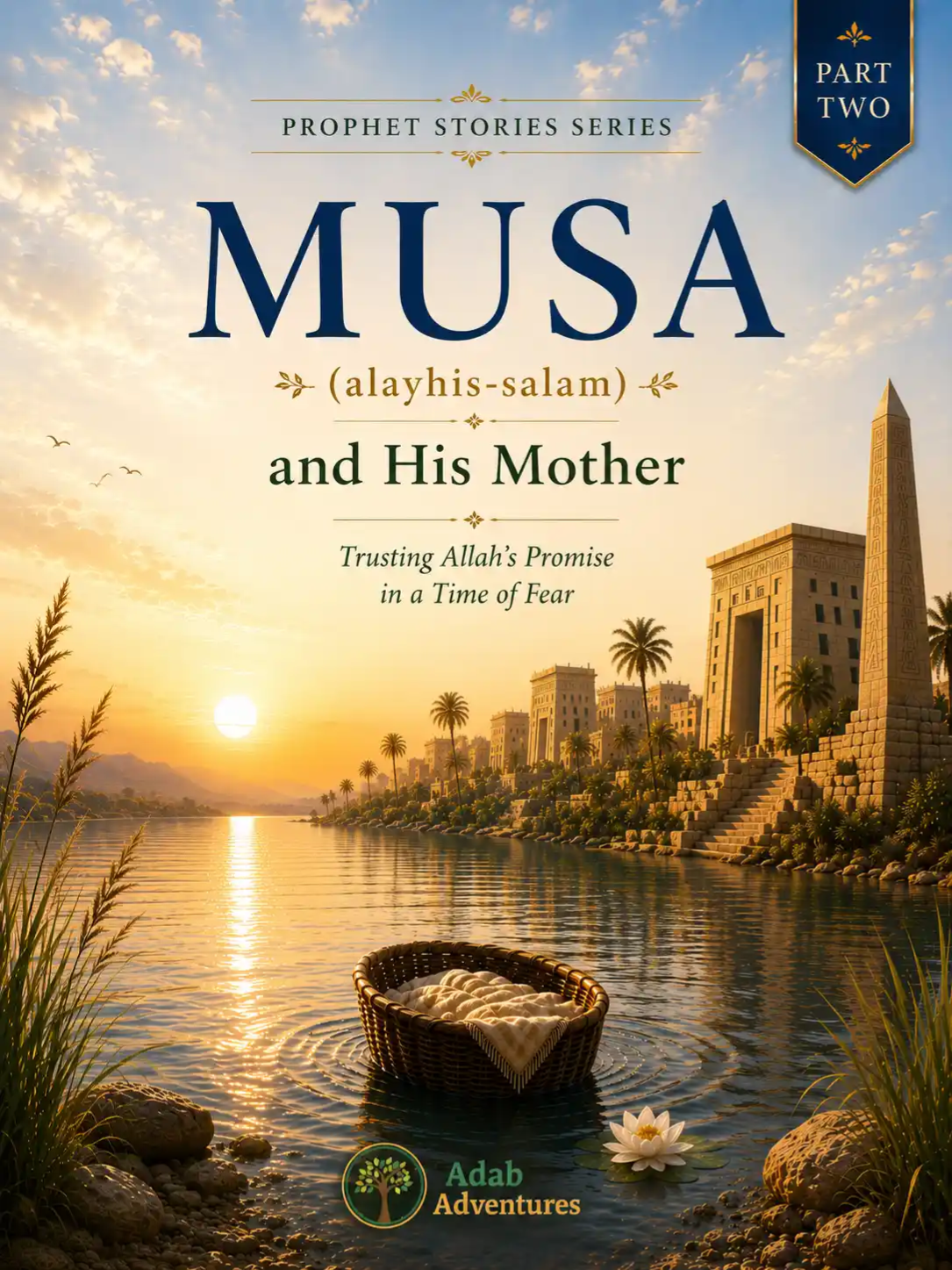
As a parent, your heart naturally wants to protect your child from every harm. It’s a powerful instinct given by Allah. Now, imagine being told by the most powerful tyrant in the land that your newborn son must be taken away. This was the reality for the mother of Prophet Musa (alayhis salam), and her story is one of the most moving accounts of faith and trust in the Qur'an.
This isn't just a historical event; it's a timeless lesson in Tawakkul (trusting in Allah). It teaches us that Allah's plan is perfect, His protection is absolute, and His promises are true. For parents seeking to instill a deep-rooted love and trust in Allah within their children, this story is an essential and powerful guide.
The Story in the Qur'an and Sunnah
The story of the birth of Prophet Musa (alayhis salam) is detailed primarily in the Qur'an. The most comprehensive account is found in Surah Al-Qasas (28), verses 7-13. It is also referenced in Surah Ta-Ha (20), verses 37-40.
These verses describe the oppressive rule of Fir'awn (Pharaoh) over the Bani Israel in Egypt and his decree to kill all their newborn sons. Allah inspired the mother of Musa to place her infant son in a chest and cast it into the river, giving her a profound promise:
“And We inspired to the mother of Musa, 'Suckle him; but when you fear for him, cast him into the river and do not fear and do not grieve. Indeed, We will return him to you and will make him [one] of the messengers.'” (Qur'an 28:7)
The narrative continues by explaining how the river carried the chest to Fir'awn's palace, how his wife convinced him to adopt the baby, and how Allah prevented Musa from accepting any wet nurse. Finally, through the wisdom of Musa's sister, he was returned to his own mother's care, fulfilling Allah's divine promise.
What This Story Teaches About Allah
This story is a magnificent illustration of Allah's names and attributes. It moves beyond a simple narrative to show us *how* Allah cares for His creation. It teaches us that:
Allah is Al-Wali (The Protecting Friend): In a land ruled by a tyrant who wanted him destroyed, Musa was protected in the heart of the enemy's own home. Allah's protection is perfect and can reach us anywhere.
Allah is Al-Hakeem (The All-Wise): Every event was part of a perfect, divine plan. The very river that seemed like a danger was the vehicle of his safety. The refusal of other nurses was the very means of his return to his mother. Allah’s wisdom is beyond our comprehension.
Allah is Al-Qadeer (The All-Powerful): Fir'awn had armies, power, and authority, yet he was powerless to stop the plan of Allah. He unknowingly raised the very child who would later challenge his tyranny. This shows that no worldly power can overcome the will of Allah.
Allah is Al-Wadud (The Most Loving): Allah did not just save Musa; He reassured his mother's heart. He inspired her, gave her a promise, and then fulfilled that promise to soothe her grief and strengthen her faith.
Lessons for Our Children
When sharing this story, we can distill these profound truths into simple, memorable lessons for our children. This story teaches them to:
Trust Allah's Plan: Even when things look scary or don't make sense, we must remember that Allah has the best plan for us. Musa's mother did something that seemed terrifying, but she did it because she trusted Allah's command and promise.
Turn to Allah in Fear: When we are afraid, our first action should be to turn to Allah, make du'a, and ask for His help and strength, just as Musa's mother did.
Recognize the Blessing of Mothers: The story highlights the special role of a mother. Allah chose Musa's mother for this incredible test and gave her the strength to pass it. It reinforces the Islamic value of honoring and loving one's mother.
Know that Allah Always Keeps His Promises: Allah promised to return Musa to his mother, and He did. This teaches children that Allah's promises in the Qur'an are true and we can always count on them.
How to Discuss It With Your Child
Connecting with your child over this story can build their faith in a beautiful way. Here are some age-appropriate questions to spark a conversation:
What did Allah promise the mother of Musa (alayhis salam) when He asked her to put him in the river?
Who was more powerful: Fir'awn with all his soldiers, or Allah with His perfect plan? Why?
Even though it looked dangerous, was baby Musa ever truly alone or unsafe? Who was watching over him the entire time?
How did Allah bring Musa (alayhis salam) back to his mother? What does this show us about Allah's promises?
If you ever feel scared or worried, what does this story teach you to do?
Frequently Asked Questions about the Birth of Prophet Musa
Which Surah contains the story of Prophet Musa's birth?
The primary and most detailed account of Prophet Musa's birth and his return to his mother is found in Surah Al-Qasas, chapter 28, specifically verses 7-13. The events are also referenced in Surah Ta-Ha, chapter 20.
Why did Musa's mother have to put him in the river?
She put him in the river out of obedience to an inspiration from Allah. At the time, the ruler of Egypt, Fir'awn, had ordered that all newborn boys of the Bani Israel be killed. Placing Musa in the river was a command from Allah and the means of his salvation, part of a divine plan to protect him.
What is the main lesson from the story of baby Musa?
The central lesson is Tawakkul, or complete trust in Allah's plan and promises. It teaches that even in the face of overwhelming fear and apparent hopelessness, one who obeys Allah and trusts in His wisdom will be protected and cared for in ways they cannot imagine. It demonstrates that Allah's power is absolute and His plan will always prevail.
Key Takeaways
Allah's plan can turn a source of fear (the river) into a means of salvation.
True trust in Allah (Tawakkul) involves both taking action based on His guidance and relying on Him for the outcome.
Allah directly inspired and strengthened the heart of Musa's mother, showing His intimate care for those who believe.
The might of an oppressive ruler is nothing before the power and wisdom of Allah.
Allah's promises are always fulfilled; He returned Musa to his mother as He said He would.