Mama, My First Friend: A Parent's Guide to Teaching Gratitude
Mama, My First Friend: A Parent's Guide to Teaching Gratitude Story Collection
Discover how the simple, heartwarming story 'Mama, My First Friend' can be a powerful tool for teaching your child the beautiful Islamic value of gratitude (shukr) towards parents. This guide provides practical tips and authentic Islamic references to help you connect this fictional tale to the core teachings of the Qur'an and Sunnah.
Introduction
As Muslim parents, one of the greatest gifts we can give our children is a heart full of gratitude, especially towards those who care for them the most. But how do we teach this concept in a way that a young child can understand and practice? The story, 'Mama, My First Friend,' offers a gentle and relatable starting point. This guide will help you use Hamza’s sweet gesture to plant the seeds of sincere shukr (gratitude) in your child’s heart, connecting it directly to the guidance of Allah and His Messenger ﷺ.
The Story Background
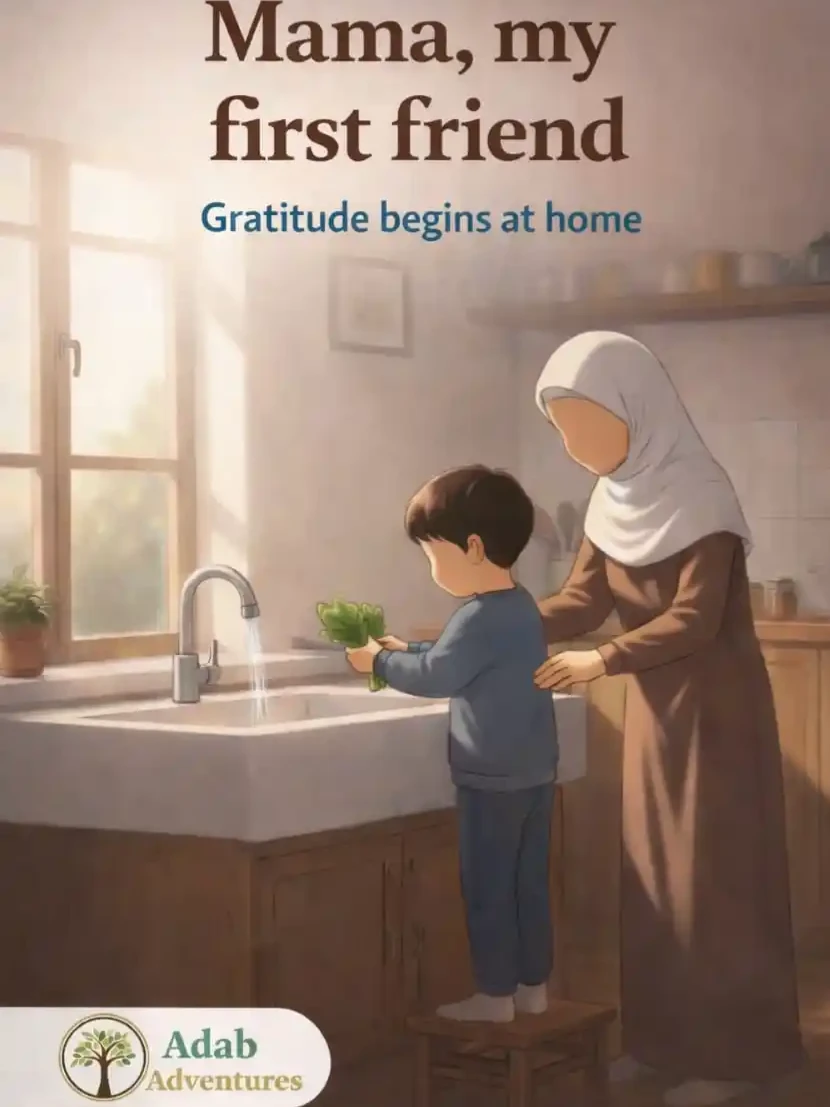
'Mama, My First Friend' is a tender story about a young boy named Hamza who decides to write a thank-you letter to his mother. Through their loving conversation, his mother gently guides him to understand that showing gratitude to parents is an act that pleases Allah. The story beautifully weaves in Qur'anic ayat and Islamic manners, showing how a simple 'thank you' is a profound act of worship.
The Islamic Lesson: The Beauty of Shukr
This story can help children understand the Islamic concept of shukr (gratitude), which is a cornerstone of our faith. Gratitude is not just about saying 'thank you'; it's about recognizing blessings and acknowledging their Source, Allah. The story highlights a crucial aspect of this: honoring and thanking our parents.
Allah directly connects gratitude to Him with gratitude to parents in the Qur'an:
“...give thanks to Me and to your parents. Unto Me is the final destination.” (Qur'an, Surah Luqman, 31:14)
This verse shows the immense status parents have in Islam. By teaching our children to thank us, we are teaching them to obey Allah. The story also introduces the beautiful du'a (supplication) that Allah Himself teaches us to make for our parents:
“...My Lord! Bestow on them Your Mercy as they did bring me up when I was young.” (Qur'an, Surah Al-Isra, 17:24)
This is a lifelong practice of showing gratitude and seeking Allah's mercy for them, even long after we've grown up. Hamza's story provides a perfect opportunity to introduce this powerful du'a to your child.
How to Discuss This With Your Child
After reading the story together, you can deepen the lesson with some gentle conversation. The goal is to connect the story to their own life and feelings. Here are a few ideas:
Ask about their 'first friend': You can ask your child, "Hamza called his mama his first friend. Who are some of the first friends Allah gave you?" This helps them see family, especially parents, as a special blessing from Allah.
Brainstorm ways to show thanks: Say, "Hamza wrote a letter to show he was thankful. What are some other ways we can show Mama and Baba we are grateful?" You can list ideas like helping with a chore without being asked, giving a hug, sharing a toy with a sibling, or simply saying, "JazākAllāhu khayran."
Practice the du'a together: Recite the du'a "رَّبِّ ٱرْحَمْهُمَا كَمَا رَبَّيَانِى صَغِيرًۭا" Surah Al-Isra (17:24) with your child. Explain that this is a special gift we can give our parents every single day.
Conclusion
'Mama, My First Friend' is more than just a sweet story; it's a key that can unlock a lifelong conversation about one of Islam's most beloved qualities. By discussing gratitude through the eyes of a fictional character like Hamza, we help our children build a foundation of love, respect, and appreciation that pleases Allah. We pray that this guide helps you nurture grateful hearts in your home.