
How to Teach Toddlers Sabr (Patience) in Islam
Listen to this article
5 min listen
How to Teach Toddlers Sabr (Patience) in Islam Story Collection
Struggling with toddler tantrums and impatience? Learn how to teach sabr in Islam through simple stories, real-life moments, and gentle parenting techniques.
Introduction
We’ve all been there. You’re in the middle of the grocery store, trying to get things done, and your toddler suddenly decides they need a snack right now. Not in a few minutes. Not after checkout. Right now.
Or maybe it’s the everyday struggle of getting them to share a favorite toy.
These moments can feel overwhelming, and frankly embarrassing especially when they keep happening again and again. But at the same time, they’re actually small opportunities, moments where we can slowly start teaching one of the most beautiful qualities in Islam: Sabr.
And sabr isn’t just about telling them to “be patient” (even though we say that a lot). It’s really about trying to see things as per their understanding - for the sake of Allah.
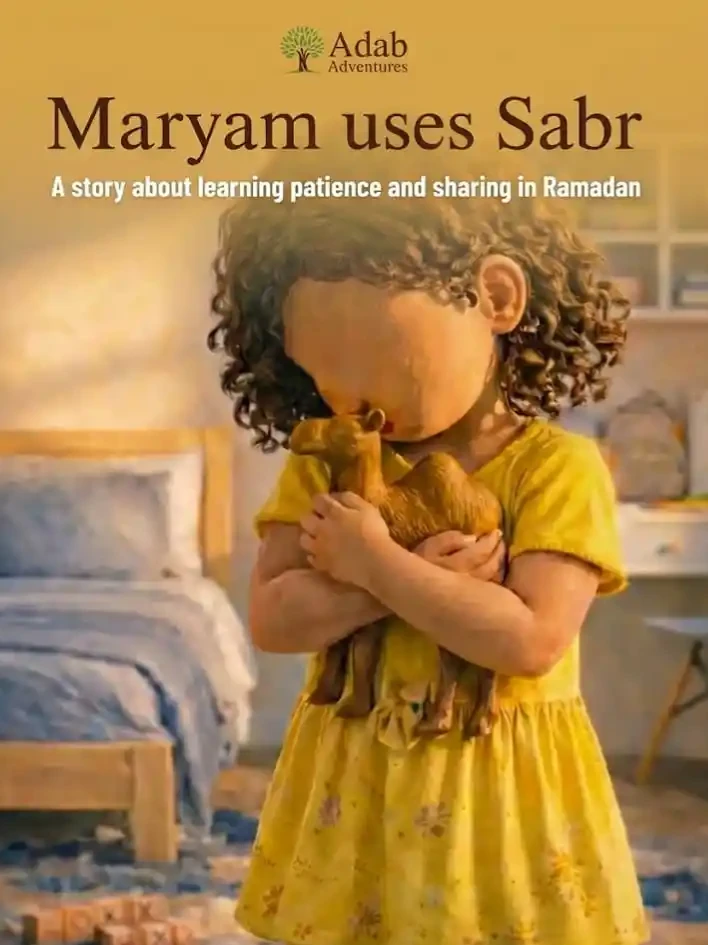
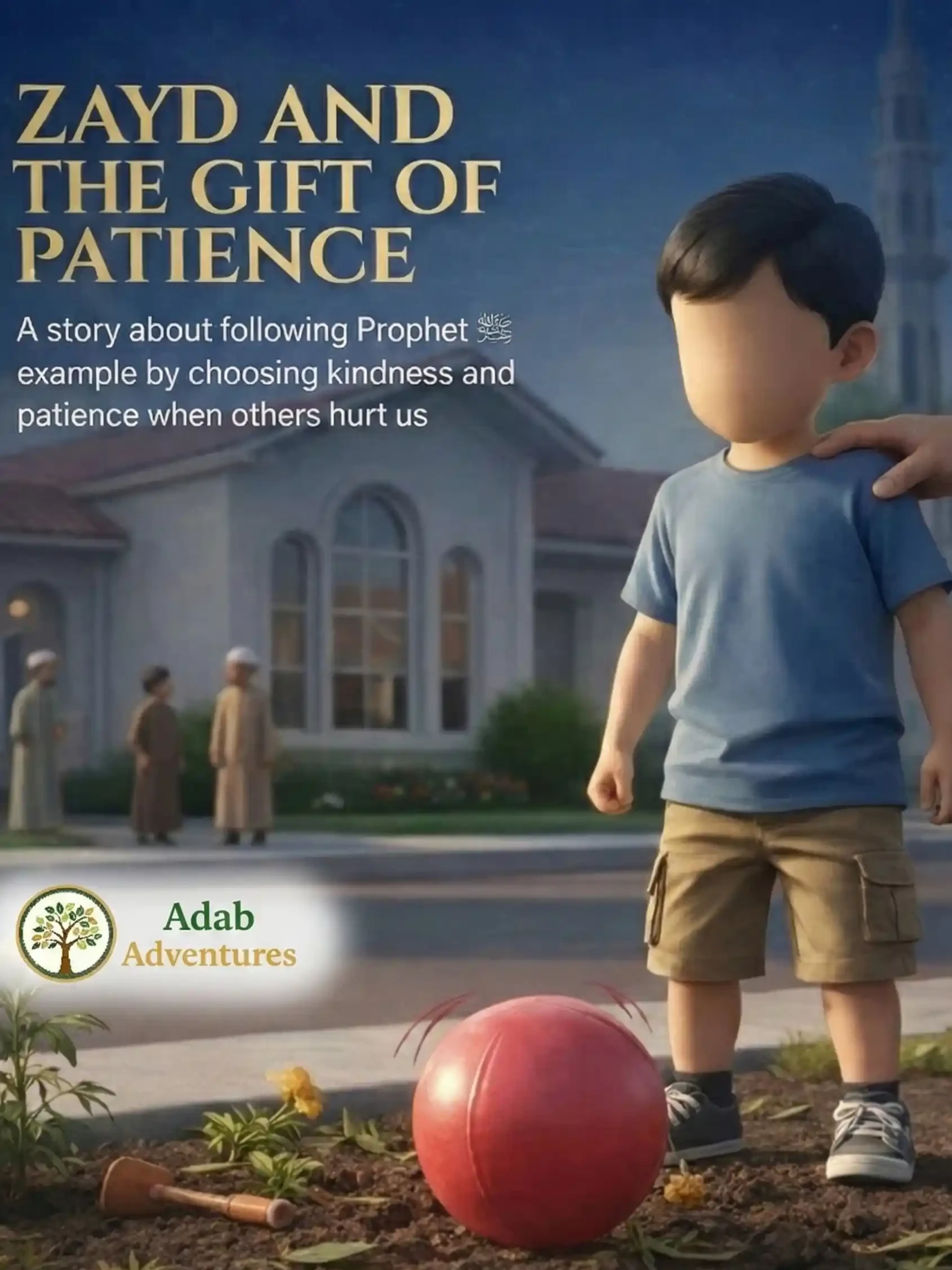
Sometimes, the easiest way to start that conversation is through simple stories. Stories like Maryam Uses Sabr and Zayd and the Gift of Patience give children something they can relate to and understand without it feeling like a lesson.
The Story Background
In "Maryam Uses Sabr," we meet a little girl who really loves her wooden camel, Najah. It’s special to her. The kind of toy kids don’t want to let go of. So when her friend Amina asks to play with it during Ramaḍān, Maryam feels that very familiar feeling and wanting to say no. Wanting to hold onto it. Maybe even hide it.
And honestly, that’s a very real reaction for a child.
But then she remembers something her mother told her. That Ramaḍān is a time to practice ṣabr. So even though it’s hard, she makes a different choice. She shares Najah.
And through that moment, she learns something important. Ṣabr isn’t just about waiting. It’s about stopping yourself from doing something you want to do, and choosing what pleases Allah instead.
Then there's "Zayd and the Gift of Patience." Zayd feels upset when his neighbor’s children crush his flower garden. And it’s understandable. Anyone would feel angry in that situation. His first instinct is to react. To get upset. Maybe even to get back at them.
But instead, his mother tells him about the Prophet Muhammad ﷺ, and how he responded when someone treated him harshly.
The Prophet ﷺ didn’t react with anger. He smiled. He responded with kindness.
That moment stays with Zayd. And instead of reacting the way he first wanted to, he chooses something better. He responds with goodness and even buys more seeds so they can plant together. It’s not the easy choice. But it’s the stronger one.
The Islamic Lesson
Sabr is such an important part of our faith. It’s mentioned in the Qur’an over and over again. But it’s not just about quietly waiting or putting up with things.
It’s more active than that.
It’s holding yourself back when you feel like reacting.
It’s continuing to do what is right, even when it’s hard.
It’s getting through difficult moments while trusting Allah.
As Maryam’s mother reminded her, Allah says in the Qur’an:
“O you who believe! Seek help in patience and As-Salat (the prayer.) Truly! Allah is with As-Sabirun (the patient).” (Surah Al-Baqarah, 2:153)
And when we think about the best example of sabr, it always comes back to the Prophet Muhammad ﷺ. The story Zayd’s mother told him is based on an authentic narration from Anas ibn Malik (may Allah be pleased with him). He described how a man pulled the Prophet’s cloak so hard it left a mark, yet the Prophet (ﷺ) simply turned, smiled, and gave the man what he wanted (narrated in Sahih al-Bukhari and Sahih Muslim). That’s a different kind of strength.
It shows us that real strength isn’t in reacting or getting even. It’s in controlling yourself and choosing to respond with goodness for the sake of Allah.
How to Discuss This With Your Child
Talk About the Feeling: After listening to the story, try asking simple questions. Not too many, just enough to get them thinking.
“How do you think Maryam felt when she wanted to keep Najah?”
“Was it easy for her to share, or was it hard?”
This helps children start recognizing their own feelings, which is actually a big step.
Connect to Their World: Bring it back to their everyday life.
“Zayd felt really upset when his flowers were crushed. What makes you feel upset?”
“What is something kind we could do instead?”
These small connections help the story feel real, not just something they listened to.
Praise the Effort: When your child tries, even a little and tries to get your attention, notice it.
“I saw you trying to wait.”
“That was you using your sabr.”
They don’t have to get it perfect. Just trying matters.
Model Sabr Yourself: This is the most important and probably the hardest. Children watch how we react all the time. When you’re on a phone with someone, taking to your co-worker or a friend or stuck in traffic or waiting somewhere, be patient and let them learn from you. It shows them that sabr isn’t just something we tell them to do. It’s something we’re working on too.
Conclusion
Teaching our toddlers about sabr isn’t something that happens in one conversation. It’s something we come back to again and again. In small ways. Through everyday situations, through stories, through how we respond when things don’t go as planned.
It’s like planting a seed. And it takes time.
But slowly, with consistency, those lessons start to settle in. And inshaAllah, we’re helping our children turn even their struggles into a way of getting closer to Allah.
Ready to start the conversation? Listen to "Maryam Uses Sabr" and "Zayd and the Gift of Patience" on Read-Along with your child today!